Biography Of Sumi Somaskanda: Journalist and BBC Anchor
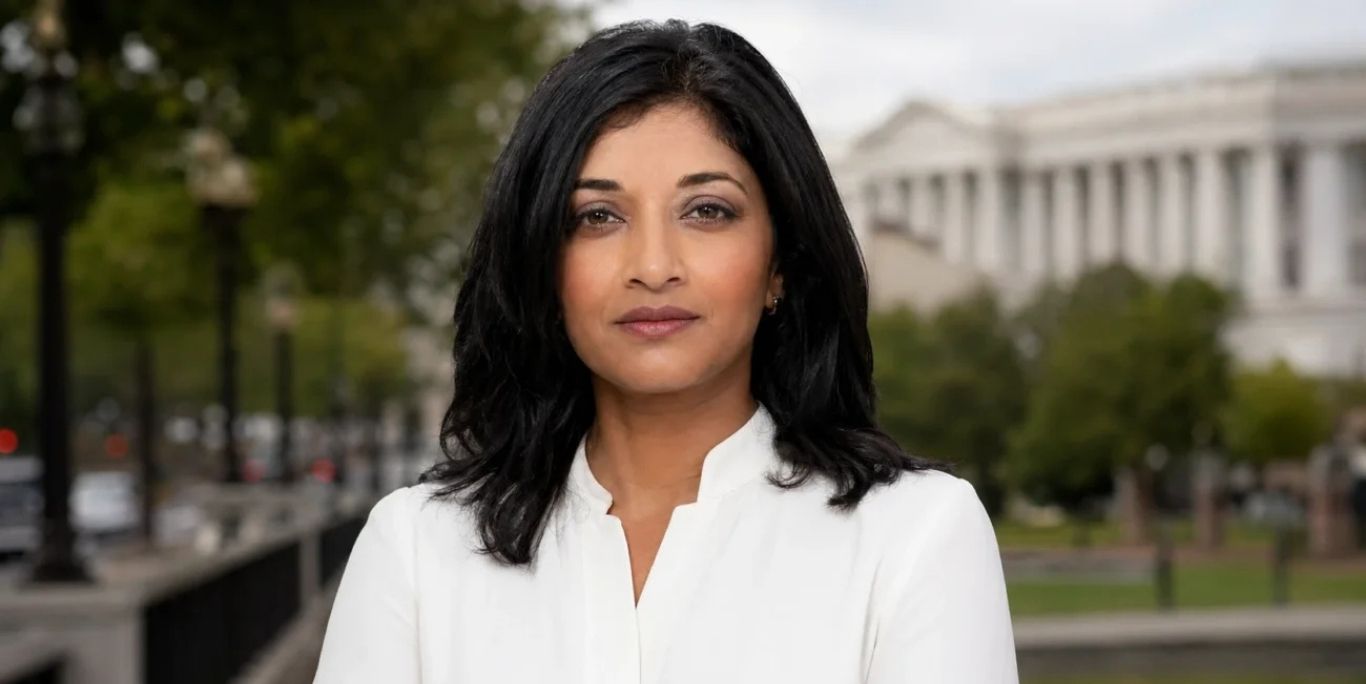
Sumi Somaskanda established her professional trajectory in the interstices of political systems, languages, and countries. She is a well-known figure to many viewers of BBC News, as she anchors the program from Washington, D.C., with a composed demeanour that is well-suited to covering elections, wars, diplomatic crises, and breaking news. However, her career did not commence on a global scale, nor did it follow the typical trajectory of a television personality seeking visibility. It expanded through years of elucidating European and American politics to audiences that extended beyond a single country, as well as through reporting, writing, producing, and editing.
That is what renders Somaskanda intriguing. She is not a celebrity journalist whose public profile is centred on her private life. She is a professional international broadcaster whose name has become more widely searched as the BBC expanded its U.S. news operation and featured her in significant global stories. The most effective method of comprehending her biography is through the work itself: the newsrooms, the reporting duties, the languages, the subjects she returned to, and the professional reputation that propelled her from Berlin to Washington. Sumi Somaskanda Biography: BBC Anchor and Journalist
Who is Sumi Somaskanda?
An American journalist, Sumi Somaskanda is a primary presenter, anchor, writer, editor, and moderator for BBC News. She is situated in Washington, D.C., where she contributes to the BBC’s expanded coverage of U.S. politics and provides international news. She worked for Deutsche Welle, Germany’s international broadcaster, in Berlin for many years prior to joining the BBC. She has worked in a variety of media, including print, television, radio, podcasting, public speaking, and live event moderation.
Somaskanda is most renowned for her contributions to international news, as opposed to a single viral interview or a single headline-making moment. She has been a journalist who has reported on a variety of topics, including politics, immigration, economics, cyber security, disinformation, democracy, and transatlantic affairs. Her public record demonstrates this. This range is significant because she has frequently collaborated on narratives that necessitate context rather than immediate response. She has established a reputation for her ability to simplify complex political developments without diminishing their gravity.
The initial query for many searchers is straightforward: why is she featured on BBC News, and what is her background? The response commences in the United States, progresses through local and regional journalism, is further elucidated in Berlin, and is ultimately returned to Washington via one of the most renowned news organisations in the world. Polished anchoring is frequently the final visible layer of a much longer professional life, as Somaskanda’s career serves as a reminder. A reporter who has dedicated years to studying the ways in which institutions, voters, governments, and public trust undergo changes in response to pressure is situated behind the desk.
Family Background and Early Life
The availability of dependable public information regarding Sumi Somaskanda’s early family life is restricted. Her professional biographies emphasise education, languages, reporting, and broadcast work, and she has refrained from emphasising her private heritage in her public image. This renders it challenging to provide the level of certainty that a responsible biography necessitates when describing her parents, siblings, childhood home, or early family influences. It is possible to assert that her public career is indicative of a strong international perspective and a willingness to navigate across cultures.
One of the clearest perspectives into that broader perspective is provided by Somaskanda’s language background. She is described in public professional profiles as a native English speaker who is also fluent in German, Spanish, and conversational Tamil. The Tamil is identified as Sri Lankan Tamil in certain profiles, despite the fact that she has not established her public identity based on personal origin stories or family biography. Her multilingual capabilities contribute to the scope of her work, as language can influence access, listening, and confidence in journalism.
An American foundation is also indicated in her biography. She was employed in the United States media prior to her extended stay in Germany and subsequently returned to Washington as a BBC anchor. That movement implies a professional existence that has been influenced by both European political experience and American newsroom training. It also elucidates how she is able to address global audiences about U.S. politics without considering America as a closed domestic subject.
Education and the Initial Stages of Journalism
Somaskanda’s formal journalism training encompasses coursework at Northwestern University’s Medill School of Journalism, which is widely recognised as one of the most prestigious journalism institutions in the United States. Medill has been long associated with newsroom discipline, clear writing, and practical reporting, and these habits are evident in the trajectory of her career. She did not immediately transition into a senior international presenting position. Before becoming a high-profile anchor, she developed her abilities across various forms of media, as is the case with many serious broadcast journalists.
Her early professional listings establish connections with local and regional outlets, such as television and radio work in the United States. It seems that the early years were characterised by documentary work, anchoring, producing, and reporting. Despite the fact that local journalism may not be as prestigious as global broadcasting, it teaches the discipline of explaining news to individuals who may not be as closely involved in politics, as well as speed, accuracy, and impartiality. Later in one’s career, it is exceedingly challenging to replicate those behaviours.
Prior to establishing herself as an international correspondent and presenter, she also served as a producer. Producing is frequently imperceptible to viewers; however, it is one of the most robust foundations that a journalist can possess. A producer acquires knowledge regarding the selection of stories, the construction of scripts, the verification of facts under time constraints, and the cohesiveness of live programming. That behind-the-scenes training is likely the primary factor contributing to Somaskanda’s subsequent proficiency in adapting to various broadcast formats.
Developing a Career in Multiple Formats
Somaskanda’s career is distinguished by the fact that she has never been confined to a single type of journalist. She has served as a writer, editor, producer, anchor, reporter, podcast presenter, and moderator. This is not uncommon in contemporary media; however, in her case, the various roles seem to have complemented one another rather than inciting her to pursue distinct paths. Her writing honed her analysis, her producing honed her editorial judgement, and her anchoring transformed her into a public guide through fast-paced narratives.
Her bylines have been featured in numerous prominent international publications and broadcasters, including those that specialise in global affairs, politics, and foreign policy. Her written work has investigated Germany’s politics, immigration debates, the expansion of the far right, cyber risks, economic divisions, refugee policy, and public distrust of the media. These are subjects that necessitate reporting that can connect human narratives with institutions and history, and they are not light. Somaskanda’s written record demonstrates a journalist who is attracted to the junctures where democracy and social change become challenging to manage.
Additionally, this scope served as an asset in her preparation for television. More than just a clear voice and composure are required to establish a strong international anchor. She must be capable of comprehending the significance of a narrative, its placement within a broader narrative, the most pertinent details, and the viewer’s initial requirements. Somaskanda’s editorial basis was broadened by her experience in various forms of journalism.
The Deutsche Welle Chapter and the Berlin Years
Berlin served as the primary testing ground for Somaskanda’s international career. She spent approximately 14 years in the German capital, where she reported and anchored during a time when Germany was at the epicentre of some of Europe’s most significant political debates. The Eurozone crisis, the refugee crisis, the rise of the Alternative for Germany, tensions with Russia, questions about digital security, and renewed debates over Germany’s role in the world were all part of those years. Berlin provided a journalist with a front-row seat to stories that were both national and global.
Somaskanda served as a senior correspondent and presenter for DW News at Deutsche Welle. DW is Germany’s international broadcaster, and its English-language service reaches audiences that extend beyond the country’s borders. This distinguished her work from the domestic German broadcasting. Not only was she providing local viewers with an explanation of German or European developments, but she was also interpreting them for an international audience that required context, clarity, and perspective.
Additionally, her tenure at DW provided her with consistent exposure to live global coverage and breaking news. A steady hand is necessary when presenting international news, as stories frequently appear with emotional stakes, incomplete information, and cross-border implications. An anchor must provide viewers with a clear account of what is known while also avoiding false certainty. Somaskanda’s subsequent position at the BBC was directly influenced by this experience.
Reporting on Germany, Migration, and Democracy
Somaskanda’s written reportage from Europe consistently demonstrates a keen interest in democratic pressure points. In her writing, she addressed the refugee crisis in Germany, the politics of asylum, concerns surrounding extremism, public broadcasting under attack, economic resentment in eastern Germany, and the far right’s appeal in regions where voters felt overlooked. These subjects necessitated attention due to their susceptibility to being reduced to stereotypes. They were simultaneously treated as political, social, and human narratives in her most effective work.
During her time in Berlin, the refugee crisis was one of the most significant European issues. The decision of Germany to accept a significant number of asylum seekers transformed domestic politics, put institutions to the test, and became a defining issue for Chancellor Angela Merkel’s government. The narrative was not comprehensible to international readers solely through slogans or numerical data. It necessitated consideration of the political forces that emerged in response, security concerns, integration, local officials, schools, and housing.
Somaskanda also addressed the rising tide of the far right in Germany and the more profound tensions between eastern and western Germany. These narratives were particularly significant because they demonstrated the persistence of history within contemporary politics. Economic disappointment, cultural resentment, migration concerns, and distrust of elites became intertwined. Somaskanda established a reporting beat by addressing these themes, which subsequently rendered her particularly pertinent to the coverage of American politics, where numerous comparable anxieties have influenced public life and elections.
Public Speaking, Editing, and Writing
Somaskanda’s career is notably robust for a television presenter due to her extensive public writing record. She has contributed to a variety of publications, such as The Atlantic, Foreign Policy, The Washington Post, Al Jazeera, Newsweek, USA Today, PRI, and GlobalPost. She was not only reading news for viewers, but also reporting and moulding stories for readers, as evidenced by these bylines. This is significant because written journalism generates a series of editorial decisions that can be evaluated over time.
Her written work frequently occupies the intersection of public trust and politics. She has addressed political polarisation, media scepticism, disinformation, and cyber threats. The profession is under duress from these concerns, which have become integral to journalism. A journalist who has dedicated years to in-depth coverage of information disorder is more likely to comprehend the reasons why audiences may be sceptical, perplexed, or overwhelmed.
She also hosted Studio Berlin, a current affairs podcast, and served as an editor at Berlin Policy Journal. Her profile was expanded beyond daily reporting as a result of these roles. Podcast hosting is contingent upon subject command, pacing, and conversation, while editing necessitates judgement regarding structure, evidence, and voice. Collectively, they contributed to the development of Somaskanda as a journalist who is capable of transitioning between formats while maintaining the primary objective of elucidating public affairs.
Transitioning to BBC News
In 2023, Somaskanda assumed the role of principal presenter at BBC News, marking a significant milestone in his already established international career. As part of a broader expansion of its U.S. news teams, the BBC announced that she would be stationed in Washington, D.C. Her appointment occurred during a time when the BBC was prioritising North American coverage and expanding its programming from Washington. The timing was such that she was in the midst of one of the most closely followed political narratives in the world: the United States is on the brink of another consequential presidential election.
The decision was logical in light of her background. Years of European reporting, experience anchoring global news, and familiarity with the democratic stresses that have impacted both Europe and the United States were all brought to the table by Somaskanda. U.S. politics is not solely a domestic narrative for BBC audiences, particularly those who reside outside of the United States. Wars, alliances, climate policy, migration, trade, and global institutions are all impacted by it.
Somaskanda’s position as principal presenter is both accountable and visible. The anchor is visible to viewers, but the position also requires the capacity to guide audiences through ambiguity, interview preparation, live coordination, and editorial judgement. However, the BBC brand can also attract scrutiny, despite its potential to open doors. Somaskanda’s calm, informed style is well-suited to the requirements of international broadcasting in that context.
World News America, Washington, and the United States remain unchanged. Election Coverage
The BBC’s coverage of U.S. politics made Somaskanda’s involvement in Washington particularly apparent. She has been associated with World News America, a BBC program that is based in Washington and is designed to provide a comprehensive explanation of American developments to a global audience. The BBC’s U.S. election programming was expanded during the 2024 election cycle, and Somaskanda was one of the presenters who anchored and reported across platforms. Her work positioned her at the epicentre of a narrative that was closely observed in Europe, Asia, the Middle East, and beyond.
Voter-focused coverage in swing states was also a component of her election work. This type of reporting is significant because it explores the actual opinions of voters regarding the economy, immigration, democracy, foreign policy, and leadership, rather than relying on polling averages and campaign speeches. Somaskanda’s background rendered her well-suited to engage in those discussions. The disparity between institutional politics and public frustration in Europe had been the subject of her coverage for years.
Additionally, she served as the host of BBC audio programming that investigated the relationship between the United States and the globe. That kind of endeavour reflects the larger purpose of her Washington role. Not only is the outcome of an election a concern for international audiences, but the implications of American decisions for the Middle East, Ukraine, climate agreements, NATO, China policy, migration, and trade. Somaskanda’s professional background has equipped her with the ability to articulate those connections without reducing them to simplistic solutions.
On-Air Style and Public Image
Somaskanda’s public image is one of professionalism, measuredness, and seriousness. It does not seem that she is attempting to attract attention through opinion-heavy branding, social-media theatrics, or personal disclosure. Her appeal is derived from her subject fluency, calm, and clarity. She adheres to the traditional role of the anchor as a guide rather than a performer in a media culture that frequently rewards heat.
This does not imply that her work is frigid. Somaskanda’s style is situated in a position where viewers frequently respond to anchors who can maintain a solemn tone without sounding distant. She is forthright, yet she is not unkind. She is capable of maintaining the viewer’s attention while covering political conflict, combat, and social tension. That is a more challenging skill than it appears, particularly when live news is updated more rapidly than confirmed facts.
The BBC and DW tradition of international broadcasting is also reflected in her public persona. Presenters are required by these institutions to address audiences with varying levels of background knowledge, political cultures, and assumptions. A local shorthand cannot be relied upon excessively by a presenter in that capacity. That requirement is satisfied by Somaskanda’s delivery, which is characterised by her ability to present narratives in a manner that is both comprehensible and respectful of their significance.
Private Life, Marriage, and Children
Sumi Somaskanda has maintained a high level of privacy in her personal life. The specifics of her close familial relationships, whether she is married or has children, are not explicitly confirmed by reliable public sources. Some online biography pages assert that they possess additional information; however, these assertions are frequently unsubstantiated or repeated without supporting evidence. It is imperative that a responsible profile does not transform that uncertainty into speculation.
This level of confidentiality is not uncommon among journalists who specialise in international affairs and politics. In contrast to actors, influencers, or entertainment figures, news anchors are frequently in the public eye due to their professional responsibilities rather than their personal lives. The journalist and the individuals in their vicinity can also be safeguarded by maintaining a boundary. In the case of Somaskanda, the public record is preponderantly indicative of her professional identity, as opposed to her personal life.
Readers may continue to seek out those specifics due to the fact that television fosters a sense of familiarity. Regularly observing an individual on screen can pique the curiosity of viewers regarding the individual who is associated with the role. However, curiosity does not generate verified information. Somaskanda’s familial life is not publicly documented in reliable detail, and it seems that she has chosen to maintain this status quo.
Net Worth and Income Sources
Sumi Somaskanda’s total worth is not publicly available. Estimates may be published on certain websites; however, they are frequently speculative and should not be considered fact. The salaries of journalists are subject to significant fluctuations based on factors such as their position, employer, country, contract, seniority, and outside work. Additionally, the majority of individual compensation details are not publicly available. Any precise figure would be based on speculation in the absence of verified financial records.
It is simpler to describe her income sources in general terms. Somaskanda has held a variety of positions, such as full-time broadcast journalism, writing, editing, podcast hosting, moderation, speaking, and instructing. Her principal current income would be logically associated with her broadcast role as a BBC chief presenter, although the specific terms of her salary are confidential. Any additional paid moderation or event labour would be contingent upon her arrangements and the policies of her employer.
Net worth searches are frequently conducted for public figures; however, they are frequently among the least dependable components of the online biography cultural ethos. In the case of Somaskanda, the more significant financial fact is not a numerical value, but the professional status that her roles indicate. The transition from senior presenter at DW to chief presenter at BBC is indicative of a distinguished media career. It does not, in isolation, disclose personal wealth.
Professional Standing, Honours, and Awards
Rather than a lengthy list of widely advertised awards, Somaskanda’s public profile consists of participation in serious public forums and respected appointments. She has served as a speaker or moderator at significant civic and policy events, such as forums that addressed issues such as misinformation, trade, migration, truth, and international affairs. Professional credibility is reflected in these invitations. Additionally, they demonstrate that her work is acknowledged beyond the confines of the studio.
Her selection as the BBC chief presenter is a significant career milestone in and of itself. The BBC is one of the most closely scrutinised news organisations in the world, and the position of chief presenter is highly visible. These appointments are not exclusively granted for on-camera appearances. They necessitate editorial reliability, live-news experience, and the capacity to represent the organization during significant stories.
Her status in international media is also attested to by her previous position as a prominent presenter at DW. Journalists who are capable of managing a variety of accents, political assumptions, countries, and levels of background knowledge are necessary for the BBC and DW, which cater to global audiences. Somaskanda’s tenure spans both institutions, establishing her as a member of a relatively exclusive group of broadcasters with extensive transatlantic experience.
Public Scrutiny and Controversies
Sumi Somaskanda is not associated with any significant personal controversies that have been extensively documented in the reliable public record. This does not imply that she has never encountered professional criticism, as public broadcasters and political correspondents are subject to rigorous scrutiny. It implies that her biography is not defined by a well-supported public scandal or significant controversy. Her public record is primarily focused on her professional accomplishments, rather than her personal life.
Nevertheless, the topics she addresses may be controversial. U.S. elections, migration, far-right politics, war, media trust, and misinformation all elicit a strong public response. Audiences who object to the framing, the questions, or the institution frequently target journalists who cover those areas. This is a component of contemporary political journalism, particularly for global broadcasters.
Somaskanda’s public persona has maintained a consistent level of consistency, which is noteworthy. She has not established her brand through ideological performance or provocation. Her work is consistent with a journalism model that emphasises the importance of preparation, restraint, and the meticulous distinction between verified fact and claim. That restraint may appear antiquated in the present media environment; however, it is also the reason why viewers seek out credible broadcasters during significant events.
Sumi Somaskanda’s Current Location
Sumi Somaskanda is currently most renowned for her role as a chief presenter for BBC News, which is based in Washington, D.C. Her work is situated in close proximity to the center of U.S. political coverage for a global audience.. She continues to be associated with BBC programming that provides an explanation of American politics, international relations, and significant breaking news. Her Washington base is crucial due to the fact that the U.S. capital is the focal point of a significant portion of the global political discourse.
Additionally, her present circumstances are indicative of a more extensive transformation in the news. International broadcasters are confronted with an increasing demand for anchors who are capable of operating in a variety of media, including television, digital video, podcasts, social media, live events, and field reporting. Somaskanda has already transcended those formats in his professional life. This renders her an ideal candidate for a BBC operation that is endeavouring to engage audiences that no longer consume news in a singular, consistent manner.
In reality, her biography is still being composed in real time. She has transitioned from developing expertise in Berlin to utilising that knowledge in Washington during a period of heightened volatility in global and American politics. The same themes that have defined the previous phase of her career, including democracy, trust, migration, power, and the challenge of clearly explaining complex events, are likely to shape the next phase.
Frequently Asked Questions
What is the name of Sumi Somaskanda?
Sumi Somaskanda is a Washington, D.C.-based American journalist and chief presenter for BBC News. She is renowned for her expertise in anchoring international news and for her previous roles as a senior presenter and correspondent at Deutsche Welle in Berlin. Additionally, she has experience in teaching, moderating public policy events, podcast hosting, and writing.
She has reported on subjects such as politics, immigration, economics, disinformation, cyber security, and global affairs. As the BBC has broadened its U.S. coverage and employed Washington-based presenters to elucidate American politics to international audiences, her profile has increased. She is held in higher regard as a serious global journalist than as a celebrity figure.
What is the nationality of Sumi Somaskanda?
In professional profiles, Sumi Somaskanda is typically identified as an American journalist. Nevertheless, her professional trajectory has been significantly international. She has extensive experience in Germany, is multilingual, and has provided global audiences with coverage of European and American politics.
Her current BBC position in Washington is particularly pertinent to her American heritage. She combines her extensive experience in interpreting European affairs with her understanding of U.S. politics. That combination lends her work a transnational quality that is well-suited to the BBC’s global audience.
Before joining BBC News, where did Sumi Somaskanda work?
Somaskanda was employed by Deutsche Welle, Germany’s international broadcaster, prior to his employment with BBC News. She was a prominent correspondent and presenter for DW News and resided in Berlin for an extended period. She covered significant European and global topics, such as German politics, migration, democracy, and international crises, during that time.
Additionally, she contributed to numerous esteemed publications and pursued employment in the fields of print, radio, television, and podcasting. She acquired experience in U.S. local and regional media and production during her earlier career. Her broader background served as an asset in her pursuit of senior international broadcast positions.
Is Sumi Somaskanda married?
Sumi Somaskanda has not publicly verified the specifics of her marital status in sources that are widely regarded as reliable. Certain websites may assert that they are aware of her marital status; however, the majority of these assertions are not supported by substantial evidence. Consequently, her relationship status should be considered private, unless she explicitly discloses it.
This privacy is in accordance with her public image. Somaskanda has prioritised journalism over personal publicity. Her public biography is based on her work, languages, reporting, and international media roles.
Does Sumi Somaskanda have children?
There is no reliable public confirmation that Sumi Somaskanda has offspring. Detailed information regarding her family life is not provided in her professional biographies or major public profiles. Unless they are made by Somaskanda herself or a credible source, it is advisable to exercise caution when considering any claims regarding children.
Numerous viewers develop an interest in the personal lives of anchors they observe frequently on television; however, not all of their information is publicly accessible. It seems that Somaskanda has established a distinct distinction between her professional and personal lives. It is imperative that that boundary be honoured.
What is the net worth of Sumi Somaskanda?
Sumi Somaskanda’s public net worth has not been verified. Online estimates, when they are present, should be considered speculation due to their lack of citation of reliable financial records. The precise salary information of journalists is frequently kept confidential, and their personal finances are rarely disclosed.
It is probable that her income would be derived from her work as a senior broadcast journalist, as well as from writing, moderation, speaking, or teaching at various stages of her career. However, it is impossible to provide an exact figure in a responsible manner. The more dependable assertion is that she occupies a prominent position at one of the world’s foremost news organisations.
What languages does Sumi Somaskanda speak?
Sumi Somaskanda is a native English speaker who is also fluent in German and Spanish, according to public professional profiles. Additionally, she is described as speaking Tamil in a conversational manner. Her career spans the United States, Germany, and international news, and those language skills are well-suited.
In journalism, language proficiency is crucial because it influences cultural comprehension, listening, and access. It is probable that Somaskanda’s multilingual upbringing facilitated her ability to transition seamlessly between global audiences and enhanced her reporting in Europe. It is one of the reasons her career has such a distinct international flavour.
In conclusion,
Sumi Somaskanda’s narrative is not a celebrity biography that is constructed around spectacle. It is the biography of a journalist who achieved recognition by consistently producing content that tackled challenging subjects, formats, and countries. She transitioned from early newsroom positions to Berlin reporting, from DW News to the BBC, and from European politics to Washington’s global stage. The authority that viewers now perceive on air was enhanced by each successive step.
The continuity of her pursuits is what distinguishes her career. She has been following migration, democracy, trust, disinformation, public institutions, and the relationship between domestic politics and global consequences from one newsroom to another. She has addressed these topics in her capacities as a writer, presenter, editor, and moderator. Her work is enriched by this diversity, which is achieved without the necessity of public spectacle to maintain its interest.
Her public identity is influenced by the fact that her private life remains private. The facts that can be verified are strong enough: a senior DW News position, a BBC chief presenter position in Washington, a long Berlin career, and a multilingual American journalist. These facts convey a significant narrative regarding international perspective and professional discipline.
The world requires journalists who can connect events without distorting them, which is why Somaskanda is of current importance. Her career, like the stories she covers, is rarely restricted to a single country. Her value is derived from the more consistent task of assisting viewers in comprehending the significance, what is known, and why the story extends beyond the initial location. This is particularly true as global news becomes increasingly rapid and boisterous.







Post Comment
You must be logged in to post a comment.