Biography Of Lee Burkhill: Garden Ninja and Television Career
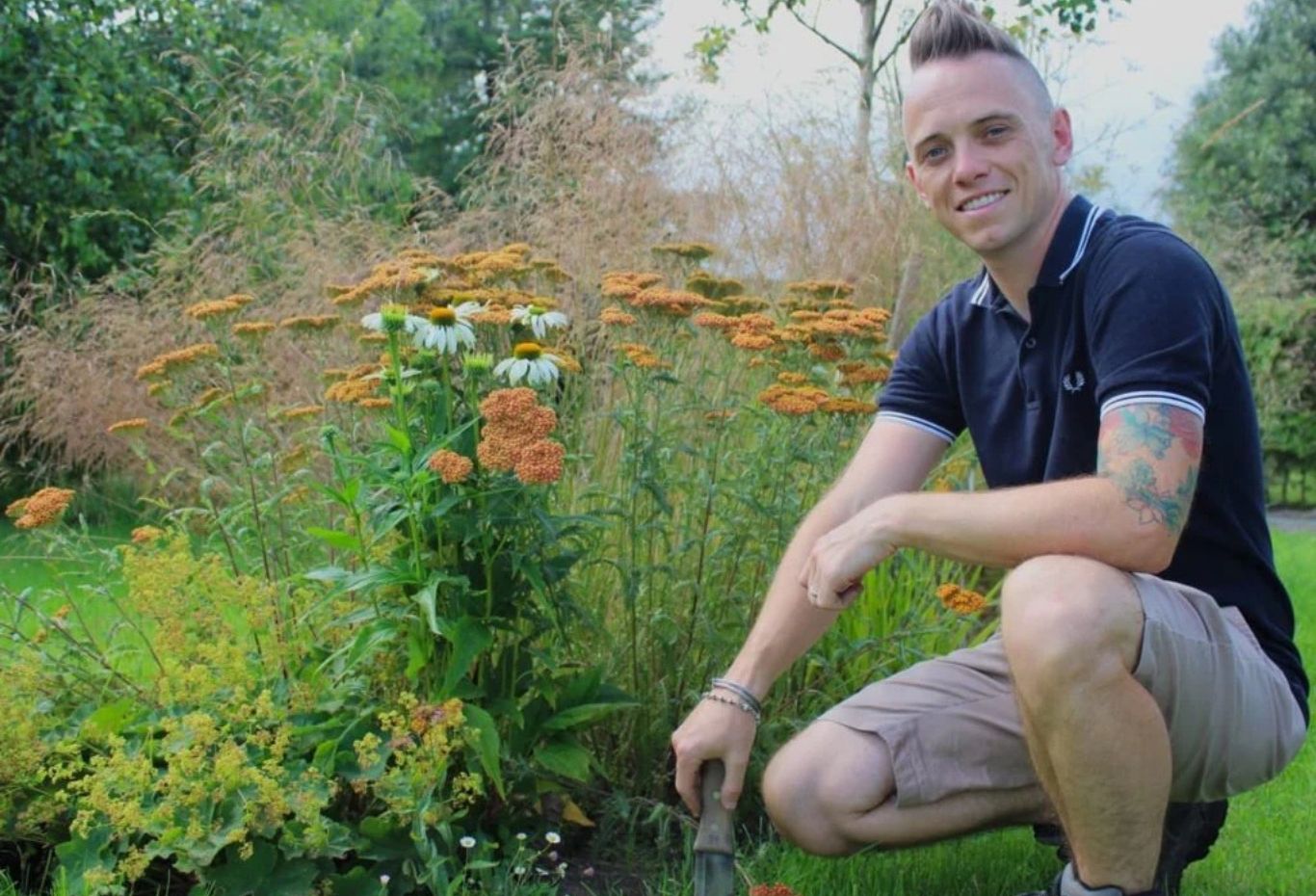
Lee Burkhill did not arrive in British gardening as a polished television personality who was awaiting the appropriate camera. He established his reputation through soil, study, design work, online instruction, and a keen comprehension of the sense of isolation that many individuals experience in their own gardens. He has gained widespread recognition as Garden Ninja and has become one of the more approachable figures in UK horticulture, particularly for viewers who encountered him through BBC One’s Garden Rescue. His narrative is not solely about career redefinition; it is about transforming a personal passion for plants into a public endeavour to alleviate the intimidation associated with horticulture.
Burkhill’s appeal is derived from a combination of technical expertise and plain-spoken assurance. He is capable of discussing the structure of plants, the value of fauna, the seasonal appeal of gardens, and the layout of the garden without diminishing its accessibility to novices. His work is grounded in serious practical experience, but his appearance, voice, and teaching style are distinctive in a field that has frequently leaned toward tradition. For a significant number of viewers, he embodies a novel breed of garden expert: one who is media-savvy, direct, inclusive, and refreshingly candid about the effort that is necessary to maintain a healthy garden.
Who is Lee Burkhill?
Lee Burkhill is a British landscape designer, horticultural educator, television presenter, writer, speaker, and online creator. He is most renowned for his design business, blog, YouTube channel, courses, and public horticulture advice, which are all under the brand name Garden Ninja. He is most well-known to television audiences as one of the designers on BBC One’s Garden Rescue, where he assists homeowners in the transformation of their domestic gardens throughout the United Kingdom. His name is searched by both TV fans and individuals seeking practical gardening assistance because his public identity lies between professional garden design and accessible education.
His birth month and year are dated February 1983, as indicated by public records and his own professional materials. This places him in the company of a generation of garden communicators who were born prior to the emergence of social media but have established a career in the era of direct audience engagement, streaming clips, blogs, and YouTube. He is situated in the North West of England, where Garden Ninja Garden Design provides services to clients in the cities of Manchester, Liverpool, Southport, Cheshire, and the adjacent regions. Although his work has now reached a national audience, his career still possesses the characteristics of a regional practice that has grown as a result of skill, persistence, and media exposure.
Burkhill is also one of the more prominent LGBTQ+ figures in mainstream British gardening television. He has publicly acknowledged his spouse and has discussed the assistance of his close friends and family members in managing type 1 diabetes. He refrains from disclosing every aspect of his private life, which is one of the reasons why a meticulous profile is necessary. The verified image depicts a married designer who maintains a high level of privacy regarding his family life while simultaneously utilising his platform to discuss horticulture, health, inclusion, and personal resilience.
Early Life and First Love of Gardening
Burkhill has stated that horticulture affected him at an early age, prior to its establishment as a profession. His fascination has frequently been associated with his childhood experiences with allotments, gardens, and the joy of cultivating plants by hand. He has discussed the impact of his grandfather, who introduced him to the rhythms of cultivation, flowers, and vegetables. This early connection is significant because it elucidates the reason why gardening is not merely a source of labour in his life, but rather a place of safety and control.
Burkhill has disclosed that he endured bullying during his adolescent years, and gardening served as a source of solace. This detail lends emotional significance to his subsequent teaching approach, as he frequently converses with individuals who are uncertain, excluded, or overwhelmed. The garden was not merely a decorative space for him; it was a place where he could concentrate, acquire knowledge, and develop self-assurance without the influence of others’ opinions. This background explains why his public advice frequently demonstrates a strong anti-snobbery inclination.
His parents, siblings, childhood home, and specific schools are not extensively documented in the public domain. Burkhill has elected to maintain a significant portion of his early family life outside of the media spotlight, which is why it is imperative that the absence of information be addressed without speculation. It is evident from his own public statements that horticulture was initially a personal passion rather than a career aspiration. It remained with him throughout his childhood and maturity until he ultimately integrated it into the core of his professional life.
Education, Training, and the Path to Horticulture
Burkhill did not commence his professional career as a full-time horticulturist. He spent approximately twelve years in the IT industry, where he was involved in project management, prior to transitioning to Garden Ninja as his profession. Although that previous occupation may appear to be distant from borders, soil, planting plans, and garden renovations, it provided him with the skills that are evident in his design work. Planning, sequencing, budgeting, problem-solving, and the capacity to adapt to changing circumstances are all essential components of garden initiatives.
His horticultural training provided a framework for the knowledge he had acquired through years of practical horticulture. He has been publicly identified as RHS-qualified, and his professional biography establishes a connection between his research and formal horticultural education. This training explains why his advice transcends casual enthusiasm, as the Royal Horticultural Society remains one of the most renowned institutions in British horticulture. He did not merely establish himself as a horticultural personality; he dedicated time to acquiring the necessary skills.
The transition from information technology (IT) to garden design was not immediate. Burkhill has recounted a period of stress and dissatisfaction that preceded his decision to alter course, with the support of his spouse. He gradually transitioned into the profession for which he is now recognised by studying, volunteering, practicing, entering competitions, building a business, and gradually transitioning into it. That path broadens the appeal of his biography, as many individuals comprehend the conflict between a secure occupation and a more significant purpose.
Garden Ninja Creation
Burkhill’s garden design work was initially known as Garden Ninja, which evolved into a more comprehensive educational platform. His style is complemented by the name’s informality, memorability, and a hint of mischief. It implies action rather than formality, which has enabled him to connect with gardeners who may have otherwise been excluded by conventional design language. However, the playful name conceals a genuine design company and a substantial corpus of educational work.
A obvious business milestone in Burkhill’s professional shift was achieved in July 2015 with the incorporation of Garden Ninja Limited. Subsequently, the organization expanded its offerings by offering garden consultations, design services, online guides, videos, courses, public speaking, and media appearances. The company provides guidance to individuals who are confronted with the types of gardens that are prevalent throughout the United Kingdom, including small plots, overlooked patios, new-build lawns, weary borders, awkward shapes, poor soil, and uncertain budgets. This practical emphasis is a significant factor in the brand’s ability to remain relatable.
The Garden Ninja website emerged as one of Burkhill’s primary publishing platforms. It comprises instructional materials regarding garden design, pruning, planting, wildlife gardening, lawn care, seasonal duties, and common errors. His YouTube channel introduced a more visual component, enabling viewers to observe techniques rather than relying solely on instructions. Trust was established prior to and concurrently with his television career through the blog and video work.
The Revolution: BBC and RHS Recognition
In 2016, Burkhill achieved a significant early milestone by winning the RHS and BBC Feel Good Gardens competition. His design, “Would you like a cup of coffee?” “Take a pew” was developed as a front garden concept and was inspired by Manchester. Burkhill’s winning entry provided him with valuable national exposure, as the competition requested that entrants envision gardens that could enhance community sentiment and mood. It also demonstrated his comprehension of the social and emotional significance that tiny domestic spaces could hold.
The significance of that accolade was that it elevated him to the esteemed ranks of BBC gardening media and RHS events. It assisted in his transition from a promising designer with an emerging brand to an individual who was acknowledged by significant horticultural institutions. This type of validation can provide a new garden designer with opportunities that conventional advertising cannot. It provides editors, producers, clients, and audiences with an incentive to remain attentive.
Burkhill subsequently expanded upon this recognition by means of media opportunities and exhibit work. In 2018, his design and planting work for Hartley Botanic at the RHS Chelsea Flower Show garnered additional professional recognition. Chelsea is one of the most meticulous stages in British horticulture, and recognition there is highly valued within the industry. Burkhill was able to verify that Garden Ninja was not merely an online persona, but a design practice that was capable of meeting high standards.
Chelsea, Hampton Court, and Industry Status
The RHS show world is challenging due to the fact that it condenses months of design consideration into a display that must appear fully realised for a brief public viewing. Ordinary gardens may require years to achieve the clarity necessary for the timing, placement, and presentation of plants. Peers, sponsors, horticultural experts, and experienced gardeners are among the individuals who evaluate designers, in addition to observers. Burkhill’s exhibition work positioned him within that tradition of intense pressure.
In 2018, his participation in Hartley Botanic’s RHS Chelsea Flower Show trade exhibit resulted in the stand receiving significant recognition, including top-level judging success. The project demonstrated his capacity to work within a brand brief, rather than solely focusing on the needs of domestic clients, by integrating heritage greenhouse design with planting and presentation. This type of work is distinct from the design of a family garden in that the outcome must be promptly communicated to thousands of visitors. It must also hold up under the close scrutiny of individuals who possess a deep understanding of plants.
His status as a communicator and designer was significantly influenced by these milestones. Burkhill’s credibility was not established through a single television audition or viral video. It was achieved through a series of smaller, verifiable stages, including years of gardening, formal study, business formation, competition success, show recognition, online teaching, and broadcast work. One of the reasons his advice frequently appears to be grounded rather than manufactured is due to the gradual development.
Lee Burkhill on Garden Rescue
Lee Burkhill became a well-known figure to a significant number of individuals as a result of His Garden Rescue on BBC One. The program’s structure is straightforward yet efficient: homeowners specify their requirements and financial constraints, designers generate competing concepts, and the selected design is implemented in a redesigned garden. Burkhill became a member of a presenter group that was associated with the post-Rich brothers era and joined the program during its later run. His presence was characterised by a unique blend of technical explication, humour, confidence, and colour.
The show is suitable for him because it pertains to ordinary gardens rather than fantasy estates. A stronger sense of identity, more wildlife, better planting, easier maintenance, places to sit, privacy, and space for children are all desirable amenities for homeowners. Burkhill’s responsibility is to convert those desires into design decisions that are compatible with the constraints of time, budget, and location. This is the point at which his design training and project management background intersect in a highly visible manner.
Occasionally, viewers may develop unrealistic expectations regarding the cost and speed of garden makeovers on television. Burkhill has contributed to the deconstruction of some of that process by elucidating the interconnections between applications, surveys, design specifications, filming demands, and build schedules. He has written about the process that occurs behind the scenes in a manner that demonstrates the extensive planning that goes into a final reveal. This transparency enhances his public image by treating viewers as intelligent, rather than merely requesting that they admire the final product.
Gardening Style and Design Philosophy
Burkhill’s design philosophy is predicated on practicality, plant-based principles, and a strong emphasis on education. He frequently emphasises that a garden should be functional for the individual who owns it, rather than solely for the purpose of capturing a photograph. Structure, movement, proportion, seasonal change, and maintenance that are compatible with the owner’s lifestyle are essential components of a successful garden. Additionally, he contends that plant knowledge is of tremendous importance, as hard landscaping alone is incapable of creating a thriving garden.
His work frequently emphasises the use of practical design principles over obscure regulations. He instructs individuals on the importance of considering sightlines, repeated planting, focal points, texture, height, wildlife value, and the connections between spaces. Additionally, he advocates for cultivators to comprehend soil, aspect, light, and water prior to investing in plants that may not thrive. This is one of his communication strengths: he conveys the impression that design is a collection of decisions rather than a talent that is exclusive to professionals.
Additionally, his recommendations frequently emphasise the importance of wildlife conservation and sustainability. Burkhill, like numerous contemporary garden designers, operates in a time when gardens are evaluated not only for their aesthetic appeal, but also for their impact on ecological health, drainage, shelter, and biodiversity. He has promoted the planting of plants that are conducive to the survival of seasonal life, birds, and insects, while still providing homeowners with functional spaces. It is crucial to maintain this equilibrium, as the majority of domestic gardeners desire both practicality and pleasure.
Private Life, Marriage, and Husbandship
Burkhill has publicly acknowledged having a spouse; however, the majority of the specifics of his marriage remain confidential. He has described his husband as supportive in personal accounts and interviews, particularly during career changes and while coping with type 1 diabetes. The public information is sufficient to confirm that marriage is a component of his life, but it is insufficient to justify speculation regarding his husband’s name, occupation, or the broader family context. A biography that is responsible should adhere to this boundary.
His transparency as a homosexual man in mainstream gardening media has significance that extends beyond his biography. The popularity of gardening television has been widespread for a long time; however, its public personalities have frequently represented a limited perspective on British domestic life. Burkhill’s visibility contributes to the expansion of that perspective without transforming his identity into a spectacle. Initially, he is depicted as a competent designer and presenter, but he is also sufficiently transparent to allow viewers to gain a more comprehensive understanding of his character.
There is no reliable public confirmation that Burkhill has offspring. Some online biography pages may attempt to address this inquiry; however, it is not advisable to invent personal family details in order to satisfy search curiosity. He has made the decision to publicise his professional work, health advocacy, and horticulture, while simultaneously safeguarding a significant portion of his personal life. This is a reliable statement. It is a common characteristic of media figures who are visible enough to be recognised but do not pursue celebrity exposure for its own sake.
Living with Type 1 Diabetes
Burkhill has been candid about her experience with type 1 diabetes, which she was diagnosed with at the age of 16. The practical and emotional reality of managing the condition through school, social life, work, and physically demanding gardening days is described in his public account through Diabetes UK. He has elaborated on the ways in which technology and carbohydrate counting have simplified the process of management. He has also been explicit in his assertion that prolonged exposure to the outdoors can complicate the management of blood sugar.
One of the more significant aspects of his public life is his advocacy. It depicts a working professional who is managing a severe chronic condition while engaging in various activities, including filming, designing, travelling, planting, and speaking to audiences. This visibility can be reassuring for individuals with type 1 diabetes, as it presents the condition as manageable without attempting to make it appear straightforward. It provides a more comprehensive understanding of the planning that underpins an active working life for individuals who do not have diabetes.
Gardening is frequently characterised as a therapeutic activity, and Burkhill’s narrative substantiates this notion while simultaneously rendering it more realistic. Mental health can be improved through physical activity, fresh air, and concentration; however, individuals with diabetes must still prepare food, take medication, monitor their condition, and rest. Burkhill has recommended that individuals maintain snacks within reach while gardening, as time can pass rapidly in the outdoors. That minor detail conveys a significant amount of information about his style: it is practical, personal, and beneficial.
His Public Image and the Reasons Why Viewers Admire Him
Burkhill’s public image is founded on contrast. He is visually distinctive without appearing to be a character designed for television, confident without being frigid, and knowledgeable without being stuffy. Despite his Garden Ninja persona, which provides him with a recognisable hook, his advice is typically based on common gardening issues. This renders him effortless to recall and trustworthy.
His warmth is also a point of connection for viewers. He does not address novices as though they have failed; rather, he regards perplexity as a typical starting point. That is a significant factor in horticulture, as many individuals inherit outdoor spaces that they are unable to comprehend and feel embarrassed that the plants are continually dying. Burkhill’s research demonstrates that gardens can be enhanced, repaired, and acquired through the application of patient decision-making.
That connection is further bolstered by his experience as an individual who alternated careers. He is not depicted as an individual who effortlessly transitioned into his natural environment. After years of private interest and rigorous study, he transitioned from information technology (IT) to horticulture. His biography is given a human shape by this reinvention, which also lends a sense of accomplishment to his accomplishments.
Money, Business, and Estimated Net Worth
It appears that Lee Burkhill’s income is derived from a variety of professional sources. These encompass consultations, online courses, writing, speaking, brand collaborations, YouTube content, and television presenting, in addition to garden design work. Garden Ninja is a legitimate business, not merely a media nickname. It offers educational products and paid consultations. Modern specialists who integrate client work with digital audiences frequently employ this combination.
Burkhill’s net worth is not a publicly available or dependable figure. Estimates may be published on certain websites; however, they are frequently unsubstantiated and should not be considered fact. It is reasonable to conclude that he has established a professional vocation that is diverse, rather than relying on a single source of income. His business value is derived from the Garden Ninja brand, media recognition, audience trust, and design expertise.
The economics of a career such as his are distinct from that of celebrity wealth. Garden design can be a highly skilled profession with a high demand; however, it also incurs expenses for travel, tools, software, staff or contractors, filming time, insurance, administration, and marketing. Although television visibility can enhance a designer’s profile, it does not necessarily result in the type of fortune that is frequently envisioned by entertainment websites. It is advisable for any serious profile to refrain from claiming that they have a verified fortune when none has been publicly documented.
Current Status and Recent Work
Lee Burkhill continues to be affiliated with Garden Rescue and remains active as Garden Ninja. His public channels and website continue to provide gardening advice, videos, courses, consultations, and media work. Additionally, he addresses audiences regarding the practical procedures that underlie superior gardens, as well as design and planting. His present profession is most effectively characterised by a combination of advocacy, design, education, and broadcasting.
His online presence is particularly significant because it enables him to connect with individuals who are not necessarily influenced by television schedules. When confronted with an actual garden issue, a viewer may locate his pruning guides, design courses, YouTube tutorials, or blog posts, which they may have discovered on the BBC. His brand’s effectiveness is partially due to the transition from entertainment to action. He provides individuals with an activity to engage in following the conclusion of the program.
The broader horticulture community has evolved in a manner that aligns with his strengths. There is a growing demand for wildlife-friendly gardens, low-maintenance planting, smaller-space design, and advice that does not presume large plots or deep pockets. Burkhill’s emphasis on practical design and accessible instruction aligns with this trend. His work is contemporary in nature, as it pertains to the gardens that a significant number of individuals possess.
The Lesser-Known Details That Influence His Narrative
The manner in which Burkhill portrays confidence is one of the most provocative aspects of his narrative. He does not merely advise individuals to purchase superior plants or replicate the designs of renowned garden designers. He instructs them on the rationale behind the placement of a plant in a specific location, the direction in which a path should be moved, and the necessity of a border’s structure prior to its colour. That method instills in cultivators the assurance to make their own decisions.
His interest in beekeeping is another significant detail. He has been identified as a beekeeper in public profiles, which is consistent with his broader interest in ecological gardening and wildlife. Beekeeping necessitates patience, observation, seasonal awareness, and respect for systems that are larger than the individual responsible for their management. These attributes are also fundamental to effective horticulture.
Additionally, the capabilities of contemporary self-publishing are illustrated in his narrative. A garden designer may have been required to secure a newspaper column, book agreement, or television contract in order to achieve widespread recognition prior to the advent of social media and video platforms. Burkhill directly built an audience by utilising his own website and video output. His intonation was influenced by his independence prior to the expansion of his audience through mainstream broadcasting.
Frequently Asked Questions
What is Lee Burkhill renowned for?
Lee Burkhill, a British garden designer and television presenter, is renowned as the Garden Ninja. He is most well-known to mainstream viewers for his appearance on BBC One’s Garden Rescue, where he assists homeowners in the creation of redesigned gardens. In addition to his television presence, he is recognised for his practical teaching, courses, online gardening advice, and garden design services.
What is the age of Lee Burkhill?
Lee Burkhill’s birth month and year are listed as February 1983 in public company records. In 2026, he will be 43 years old. The precise date of his birth is not widely verified in reputable public sources, so it is important to exercise caution when making more specific claims.
Is Lee Burkhill married?
Indeed, Lee Burkhill has publicly acknowledged the existence of a spouse. He has discussed his husband’s assistance during his transition to a new career and in managing his type 1 diabetes. The finer details of his marriage are kept private, and there is only limited verified public information available about his spouse.
Does Lee Burkhill have children?
There is no reliable public confirmation that Lee Burkhill has offspring. While certain biography websites may speculate about private family details, they should not be accepted without clear sourcing. According to Burkhill, his public gardening profession is distinct from his domestic life.
Before assuming the role of Garden Ninja, what occupation did Lee Burkhill pursue?
Lee Burkhill spent approximately twelve years in project management and information technology prior to transitioning to garden design as his primary occupation. He subsequently retrained and advanced his horticultural career by participating in competitions, volunteering, studying, and designing. It is probable that his prior professional experience facilitated his management of the planning and logistical aspects of garden initiatives.
Is Lee Burkhill diagnosed with type 1 diabetes?
Yes, Lee Burkhill has publicly disclosed that he was diagnosed with type 1 diabetes as an adolescent. He has discussed the management of the condition while gardening, filming, travelling, and working long outdoor days. His comments have contributed to the increased awareness of the planning required to maintain an active lifestyle while living with type 1 diabetes.
What is Lee Burkhill currently engaged in?
Through Garden Ninja, Lee Burkhill continues to serve as a television presenter, content creator, speaker, educator, and designer. He continues to publish practical horticulture advice online and remains affiliated with Garden Rescue. His present endeavours integrate direct teaching and design services with media visibility.
In conclusion,
The career of Lee Burkhill serves as a reminder that public expertise ordinarily does not emerge overnight. His success was the result of a combination of factors, including personal resilience, formal training, business risk, show-garden recognition, online teaching, and television work, as well as childhood interest. The Garden Ninja brand is bolstered by its history, which is based on more than just a memorable name. It is the culmination of years of research into the functionalities of gardens and the learning processes of individuals.
Burkhill’s distinctiveness is not solely due to his expertise in flora. Numerous individuals in the field of horticulture engage in this activity. His talent lies in the ability to elucidate gardens in a manner that fosters a sense of competence rather than condemnation. This is a valuable skill in a country where millions of individuals possess outdoor spaces but are uncertain where to commence.
However, his biography also conveys a more subdued message regarding the importance of reinvention. He transitioned from an IT vocation to a creative field that required significant effort, established a business that was recognised, and became a well-known figure on national television. He achieved this by being candid about the genuine labour that goes into confidence, as well as his health and identity.
Lee Burkhill has now established a distinct position in the British horticultural media. He is a designer, educator, presenter, and proponent of gardens that are both visually appealing and attainable. The lasting impression for viewers and readers who search his name is straightforward: Garden Ninja is not merely a persona; it is the public face of a man who transformed a lifelong refuge into a useful, generous career.








Post Comment
You must be logged in to post a comment.