Biography Of Eileen Catterson: Facts, Career, and Life
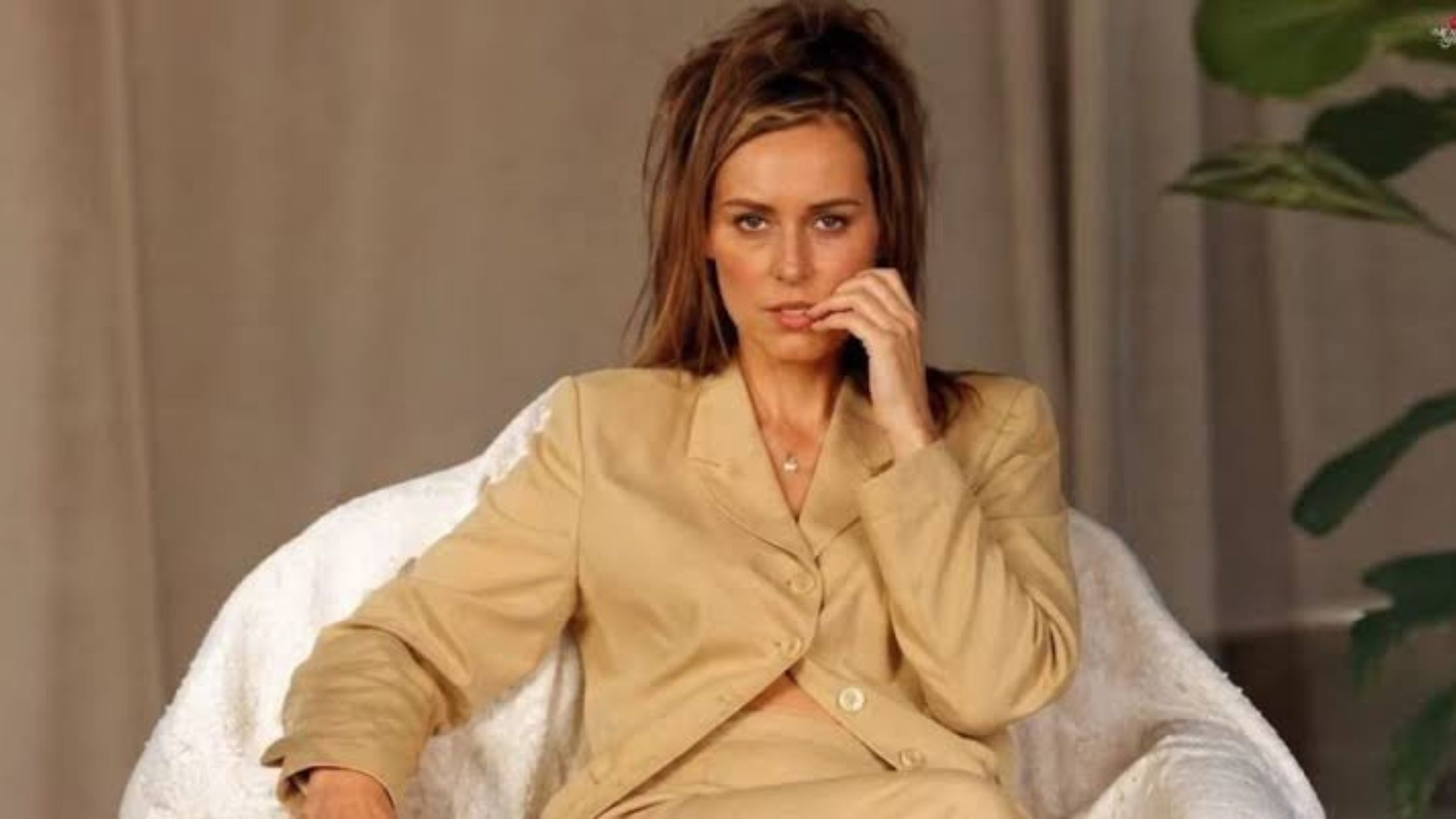
Eileen Catterson has led a public existence that defies the conventional celebrity narrative. She rose to prominence at a young age, won one of Scotland’s most prominent beauty titles, progressed through the modelling industry, and subsequently gained widespread recognition as the long-term partner of Marti Pellow, the lead singer of Wet Wet Wet. However, she resisted the temptation to convert her visibility into a permanent public career, in contrast to numerous individuals who experienced the allure of pageants, pop fame, and tabloid attention. That is one of the reasons why individuals continue to pursue her: the facts are captivating, the gaps are genuine, and the woman at the epicentre of the narrative has maintained a significant portion of her life as her own.
Eileen Catterson is most renowned for her role as Miss Scotland 1987 and her time as a model. Pellow’s success with Wet Wet Wet established him as one of the most recognisable pop vocalists in Britain during the 1990s, and her name is frequently mentioned in connection with him. Despite the fact that neither individual has consistently disclosed their private lives to the celebrity press, their relationship has endured for decades in the public consciousness. In order to effectively write about Catterson, it is necessary to approach the narrative with caution: the extent of what is known, the extent of what has been reported, the value of what remains private, and the reasons for this privacy.
Family Background and Early Life
Eileen Catterson is of Scottish descent, and public records associated with her name indicate that she was born in March 1970. The most frequently cited and widely accepted detail from her early public life is that she was still a teenager when she claimed the Miss Scotland title in 1987. This timing is consistent with this. Beauty pageants continued to hold a significant position in British popular culture, particularly through newspaper coverage, television appearances, and local civic attention, during the time she was of age. A national title could quickly open doors for a young Scottish woman with modelling ambitions.
There is a lack of public information regarding Catterson’s childhood, parents, education, or early family life. Although online biographies have continued to provide details in spite of this absence, a significant number of these claims are either weakly sourced or repeated without clear evidence. A responsible account should not falsely assert that they are aware of the specifics of her upbringing if she has not opted to disclose it. By her late teens, she had entered a highly visible world that was centred on public judgement, presentation, pageantry, and modelling. This can be asserted with certainty.
It is not uncommon for an individual who achieved fame prior to the internet’s ability to search for every career trajectory to lack detailed family information. In the 1980s, a model or pageant winner could be featured in newspapers, catalogues, agency books, and local press without leaving the digital trail that readers now anticipate. This complicates the reconstruction of Catterson’s early life in comparison to that of younger public figures. It is also imperative to exercise caution, particularly when making assertions regarding relatives, schools, and private family history.
Miss Scotland 1987
Miss Scotland 1987 was Eileen Catterson.
In 1987, Catterson’s most significant public triumph occurred when she was named Miss Scotland. The title placed her in a long-standing national pageant tradition that frequently influenced significant international contests. During that period, it was customary for Miss Scotland titleholders to represent the nation on a broader scale, such as at Miss Universe. Nevertheless, the international transition for Catterson was immediately complicated.
According to public pageant records, Catterson was deemed ineligible for the Miss Universe competition due to her youth. She was reportedly 17 years old at the time, and the pageant’s age restrictions prevented her from participating. This detail has become one of the most enduring facts associated with her name, in part because it provides an unconventional twist to her pageant narrative. Despite winning the national title, she was unable to access the global platform that is typically associated with it due to eligibility regulations.
The manner in which her early fame is remembered was significantly influenced by that occasion. Numerous beauty champions are remembered for their international placements, televised appearances, or subsequent careers in the entertainment industry. However, Catterson’s year as Miss Scotland is primarily remembered for the title and her subsequent disqualification from Miss Universe contest. The spotlight was peculiar in nature: she had accomplished sufficient accomplishments to warrant recognition, yet one of the most significant opportunities associated with the title was forfeited due to timing.
Modelling Public Image and Career
Catterson was frequently referred to as a model following her victory as Miss Scotland. The modelling industry of the late 1980s and early 1990s was not as searchable or self-documented as it is today, which is why a significant portion of her professional work is not readily accessible in contemporary online archives. This does not render the modelling label false; rather, it cautions readers to exercise caution when encountering detailed claims that lack named campaigns, dated publications, or agency records. She was employed as a Scottish model after gaining recognition through pageantry, which is the most reliable description.
The design of the era significantly influenced Catterson’s public image. pageant victors and models were frequently depicted in regional media as a combination of poise, glamour, and local pride. Even if the individual does not become a ubiquitous name, a national title could result in fashion work, appearances, and introductions to the entertainment industry. Catterson’s subsequent association with a prominent musical artist served to maintain her visibility beyond her modelling career.
Modern biography writing is prone to the temptation to exaggerate the grandeur of each early career, despite the lack of empirical evidence. In the case of Catterson, this would be an error. In part, her allure as a subject is derived from the contrast between her early visibility and her later privacy. She was public enough to be remembered, but not so public that every professional move, photograph, or job was archived for easy inspection.
Marti Pellow’s appointment
The reason for the most frequent searches of Eileen Catterson today is her relationship with Marti Pellow. Pellow, born Mark McLachlan, rose to fame as the lead vocalist of Wet Wet Wet, the Scottish band that produced hits such as “Sweet Little Mystery,” “Goodnight Girl,” and “Love Is All Around.” By the 1990s, he was one of the most recognisable voices in British pop. Not only was his music the subject of his fame, but also the individuals who were in his vicinity.
It has been reported for a long time that Catterson and Pellow were partners, with some sources indicating that their relationship began around 1990. A narrative that is frequently recounted alleges that they encountered or became acquainted during a football match, frequently in the context of the Old Firm rivalry between Celtic and Rangers. The narrative has been retold with varying wording, and the specifics are subject to change. The only constant is that Catterson was publicly recognised as the woman standing beside Pellow during the most intense years of his fame.
Their relationship is distinctive in that it seems to have persisted throughout Pellow’s life, despite the fact that he underwent significant life changes. It encompasses the commercial zenith of Wet Wet Wet, the pressure of tabloid attention, his addiction and recovery period, and his subsequent work as a solo singer and stage performer. Celebrity culture is characterised by a lack of longevity in relationships, which are frequently reduced to brief periods of appearance, conjecture, and separation. Catterson’s name has persisted in the public record due to the fact that the relationship did not dissipate after a single album cycle.
Marti Pellow, Wet Wet Wet, and the Peak of Fame
It is advantageous to comprehend the extent of Pellow’s fame in order to comprehend why Catterson became a subject of enduring fascination. In the early 1980s, Wet Wet Wet was established in Scotland and went on to become one of the most successful British pop bands of their era. The band’s most significant cultural moment occurred in 1994, when “Love Is All Around” dominated the UK rankings following its inclusion in the film “Four Weddings and a Funeral.” The song’s pervasiveness was so overwhelming that even the band members began to feel uneasy about its prolonged tenure at the top.
The intensity of attention surrounding Pellow was altered as a result of that success. He was no longer merely the frontman of a popular band; he was a national celebrity whose vocal was associated with one of the most influential pop records of the decade. Partners are seldom left unaffected by fame of that magnitude. Even private people can become part of the public story when they are close to someone whose face is on television, magazine covers, and concert posters.
Catterson did not seem to be pursuing that attention. This is one of the reasons her public image is distinct from that of the companions of numerous renowned performers. Although she has been the subject of discussion in relation to Pellow, she has not created a visible media career as a result of this association. Her discretion has rendered her more difficult to identify, but it has also contributed to the preservation of a certain level of dignity associated with her name.
Questions Regarding Marriage, Relationships, and Children
Whether Eileen Catterson and Marti Pellow are married is one of the most frequently asked queries about her. The public response is not entirely resolved. In certain older references, the term “wife” has been used, while more meticulous recent accounts refer to her as his long-term partner and state that it is not publicly affirmed whether they ever legally married. This distinction is significant because a public marriage record is not the same as affectionate or casual language.
Additionally, enquiries regarding the couple’s children have arisen. Similar to the marriage inquiry, there is no definitive public affirmation that they have children together. While some online pages speculate about family life, many do so without providing clear sourcing. Catterson and Pellow have maintained the confidentiality of their family information, and readers should refrain from accepting unsubstantiated assertions as fact.
The bond between them has been described as significant and long-lasting. This is evident. It was reported that Catterson maintained a close relationship with Pellow during his difficult years, which included his battle with addiction. Public accounts indicate that she was a consistent presence during the period in which his private life was in turmoil. Respect should be shown to that section of the narrative, as it pertains to actual individuals rather than characters in a celebrity drama.
Catterson’s Reported Support and Pellow’s Addiction
In the past, Marti Pellow has disclosed his heroin addiction and subsequent recovery in public. After the apex of Wet Wet Wet, his candour regarding that period has become an integral component of the public’s comprehension of his life. Addiction has the potential to isolate individuals, distort relationships, and exert significant pressure on those in close proximity to the individual who is struggling. During that period, Catterson’s name is mentioned in accounts because she was alleged to have provided him with support while simultaneously establishing boundaries.
According to reports, she was a person who profoundly cared for Pellow but was unable to disregard the harm that addiction caused. This detail provides a more human perspective on her than many glamour-focused summaries. She was not only a former model who was in close proximity to a renowned singer; she was also a close friend of a man who was undergoing a severe and public personal crisis. The narrative implies that loyalty is a virtue, but it also stresses the importance of self-protection, which is frequently the more truthful and challenging form of affection.
It would be unjust to transform this aspect of Catterson’s existence into a melodrama. Pellow is the primary focus of his recovery, and the private experiences of those in his vicinity are not entirely disclosed. However, the reports that reference her support provide a meaningful explanation for her continued inclusion in his narrative. Not only is her significance rooted in her beauty-pageant history and celebrity proximity, but also in her ability to persevere through challenging years.
Public privacy as a defining choice
Catterson’s most remarkable quality as a public figure may be her reluctance to become more public than is absolutely necessary. She has refrained from conducting numerous interviews regarding Pellow, publishing memoirs, or cultivating an influencer-style identity. It appears that she has not attempted to transform curiosity into a brand. In a time when nearly every association with fame can be commercialised, the silence appears to be intentional.
Readers who are seeking a comprehensive biography may be frustrated by this privacy. It also frustrates websites that rely on straightforward responses regarding net worth, family, residences, and current routines. However, it is important to note that anonymity is not a detriment to a public profile. It is a fact about the individual, and in the case of Catterson, it may be one of the most revealing facts available.
Her decision to maintain a low profile also alters the manner in which her narrative should be composed. A celebrity who seeks attention is subject to a distinct form of media coverage compared to an individual who has primarily avoided it. Catterson’s visibility was initially established through pageantry, modelling, and a well-known relationship; however, it has not been consistently maintained. A accurate biography must acknowledge the distinction between public entitlement and public interest.
Net worth, income, and employment
Questions regarding Eileen Catterson’s net worth are frequently included in searches; however, credible figures have yet to be publicly disclosed. Numerous celebrity biography websites provide estimates for private individuals without providing financial records, property documents, company accounts, or verified income sources. It is advisable to exercise caution when interpreting those figures. There is no reliable public premise for a precise estimate of Catterson’s personal wealth.
Her known or reported income sources would have likely included modelling work from her early life and any subsequent business or professional activity that is publicly documented. Claire Catterson Casting Ltd has been dissolved, but a Companies House document under her name has associated her with a directorship. Public business records can verify the status of a company and its appointments; however, they do not automatically disclose personal fortune. They should not be expanded into a lifestyle narrative in the absence of evidence.
Pellow’s professional trajectory is an entirely distinct matter. He has generated income through solo recordings, touring, theatre work, and other entertainment endeavours, in addition to his success with the band. Some websites appear to confuse his public earnings with her private finances due to their association with Catterson. This is not a proper form of reporting. Her net worth should be classified as unknown unless assets are publicly verified or jointly documented.
Common Misunderstandings and Media Coverage
Catterson’s online profile is replete with misunderstandings due to her limited public record. Without providing substantial evidence, certain websites confidently describe relationships, family ties, career accomplishments, and wealth. Others repeat claims from earlier pages until they begin to appear established through repetition alone. This is the method by which misinformation frequently accumulates regarding individuals who are associated with well-known figures.
The term “wife” has been employed in certain reports and interview references to refer to Catterson in relation to Pellow, which is a recurring issue. Other accounts are more circumspect and refer to her as his partner, while also noting that the marriage has not been publicly acknowledged. The most secure interpretation is that she has been his long-term companion, while the precise legal status remains confidential unless confirmed by a clear record or direct statement.
An additional source of confusion pertains to her associations with other prominent Scottish figures. Claims that she has been romantically involved with other musicians have been made online; however, they are not as consistently substantiated as the Pellow relationship. Some family-connection claims are also circulated without easy verification. Every repeated search result should not be considered a fact in a serious biography.
Lasting Interest and Cultural Site
Eileen Catterson occupies a unique but diminutive position in Scottish popular culture. She is associated with the 1990s pop boom through Pellow and is a member of the late-1980s beauty title and print-era modelling world. Her name has a long-lasting impact on public memory as a result of this combination. Individuals who recall Wet Wet Wet’s chart dominance frequently seek out the woman who was situated in close proximity to the limelight, but not within it.
Additionally, her narrative illustrates a transformation in the celebrity culture. During the 1980s and 1990s, public figures were recognisable through newspapers and television without becoming perpetually accessible. Currently, readers anticipate the inclusion of personal updates, public photos, recordings, recent interviews, and social media accounts. Catterson’s life defies this anticipation, rendering her more enigmatic than she may have been in her own era.
Additionally, there is a quiet allure to an individual who achieved fame at a young age and subsequently declined to provide an explanation for their actions. Fame often rewards constant confession, but Catterson’s public record suggests a different instinct. She has permitted a few facts to remain uncontested and has refrained from addressing the remainder. That restraint is sufficiently uncommon to be incorporated into the narrative.
Eileen Catterson’s Current Location
The most straightforward explanation for Eileen Catterson’s current location is that she appears to reside primarily outside of the public eye. She is still searched because of her past as Miss Scotland, her modelling background, and her long association with Marti Pellow. However, she does not seem to maintain a consistent media presence or a high-profile public career. That makes precise current details difficult to verify.
In England, public business records have identified an individual by her name in connection with a dissolved company; however, these records do not offer a comprehensive personal portrait. They do not provide readers with information regarding her daily routine, the causes she supports, or whether she desires any additional attention. Anything beyond the broad facts should be considered limited in the absence of current interviews or direct statements. This is particularly true for assertions regarding personal beliefs, income, children, and domestic life.
Pellow maintains a high level of professional engagement, which ensures that her name is frequently brought up in public discourse. Catterson is frequently referenced in search results as a consequence of the inclusion of sections about his partner in his profiles. Nevertheless, her personal stance appears to be in accordance with the trajectory of her adult life: visible enough to be recalled, yet private enough to preclude being fully packaged. For numerous readers, this is precisely what renders her captivating.
Frequently Asked Questions
Who is Eileen Catterson?
Eileen Catterson, a Scottish former model and beauty pageant titleholder, is most renowned for her reign as Miss Scotland 1987. As the long-term partner of Marti Pellow, the lead singer of Wet Wet Wet, she is also widely recognised. Her public profile is a unique blend of pageant history, modelling, and her association with one of Scotland’s most recognisable pop performers.
She is not a celebrity who has consistently sought media attention. Pageant records, entertainment coverage, and public references associated with Pellow comprise a significant portion of the information available about her. The reason for the necessity of separating verified facts from recurrent claims in order to create accurate profiles of her is due to the limited record.
What is the age of Eileen Catterson?
The birth date of March 1970 is listed in public records associated with the name Eileen Catterson. In the event that the record pertains to the same Eileen Catterson, she would be in her mid-50s in 2026. The date is also consistent with the frequently cited narrative that she was 17 years old when she was crowned Miss Scotland in 1987.
Similar to numerous private individuals, it is imperative to exercise caution when managing precise personal information. Although public-record information may be beneficial, it should not be employed to create a more comprehensive private biography. The age detail is most effectively comprehended in accordance with her established pageant timeline.
Was Eileen Catterson crowned Miss Scotland?
Indeed, Eileen Catterson is frequently referenced as Miss Scotland 1987. The title in question is the most comprehensively documented accomplishment of her early public life. She is particularly remembered for the year in which she was reportedly unable to compete at Miss Universe due to age eligibility regulations.
While still in her youth, her victory as Miss Scotland secured her a prominent national position. It also helped open the public path into modelling and entertainment-world attention. Even decades later, that title continues to be one of the primary reasons her name is included in searches.
Is Marti Pellow married to Eileen Catterson?
Marti Pellow’s long-term partner is frequently referred to as Eileen Catterson. The term “wife” has been employed in certain older references; however, more circumspect accounts assert that it has not been publicly verified whether they were legally married. Consequently, the most precise terminology is “partner,” unless a direct confirmation or a clear marriage record is available.
It has been reported that their relationship has persisted for decades. The couple has not made their private life a perpetual media topic, despite the fact that it has remained a component of Pellow’s public narrative. One of the reasons why enquiries regarding marriage persist is due to their privacy.
Are there any offspring between Eileen Catterson and Marti Pellow?
There is no reliable public confirmation that Eileen Catterson and Marti Pellow have children together. Although certain websites speculate about family life, these assertions are frequently unsubstantiated. The couple has maintained the confidentiality of their personal information, and it is imperative that this privacy be upheld.
The most secure response for readers is straightforward: there is no verified public information that indicates they have children. Unless a clear and credible source is provided, any article that names children or describes family arrangements should be approached with caution. Silence should not be interpreted as an invitation to speculate in Catterson’s situation.
What is the net worth of Eileen Catterson?
The net worth of Eileen Catterson is not consistently ascertained. Unless they are substantiated by records, direct confirmation, or credible financial reporting, online estimates should be considered approximations. The majority of the figures associated with her name lack sufficient evidence to be of any practical value.
Modelling, pageantry, and a recorded business appointment comprise her public profile; however, they do not establish her personal wealth. Marti Pellow’s earnings from music and theatre should not be routinely assigned to her. A meticulous biography should indicate that her financial affairs are kept confidential.
How is Eileen Catterson currently spending her time?
Eileen Catterson appears to maintain a relatively private existence, free from the typical media spotlight. She is still referenced in relation to Marti Pellow and Miss Scotland’s history; however, she does not appear to have a public career that is centred on social media, television, or interviews. This renders it challenging to provide a precise account of her present day-to-day existence.
The most appropriate response is that she continues to be a public figure who is remembered, rather than an active celebrity. Her early title, modelling background, and long-standing relationship with Pellow continue to generate interest in her name. In addition to these facts, there is a lack of widespread confirmation of current personal information.
In conclusion
Eileen Catterson’s biography is not a narrative of perpetual reinventions, public confessions, or infinite career chapters. It recounts the journey of a young Scottish woman who achieved the title of Miss Scotland, pursued a career in modelling, and subsequently formed a connection with one of the most prominent British pop artists of the 1990s. For decades, curiosity has intensified in response to these facts. However, the public record is considerably more conservative than the inquiry interest that has been generated by her name.
It is this restraint that contributes to the uniqueness of her narrative. Catterson lived in close proximity to renown without appearing to be reliant on it. She was associated with glamour through pageantry and modelling, and with pop history through Marti Pellow; however, she did not establish her identity through consistent exposure. Her privacy seems almost antiquated in a society that frequently encourages excessive disclosure.
It is a fact that not all lives that are touched by fame are fully public property. Eileen Catterson’s narrative continues to resonate with readers due to its intersection with Scottish pageant history, British cultural memory, and a lengthy relationship that has endured significant scrutiny. However, the portrait that is the most candid allows for the information that she has elected not to disclose. The story does not lack that boundary; it is one of the most explicit elements it conveys.








Post Comment
You must be logged in to post a comment.